The Council of the South at Ain El Tineh Palace
Published · By Official Press Release from Council of the South
The Council of the South Presents President Nabih Berri with the Fifth Edition of the “White Hands” Series and Reviews Its Key Programmes and Projects
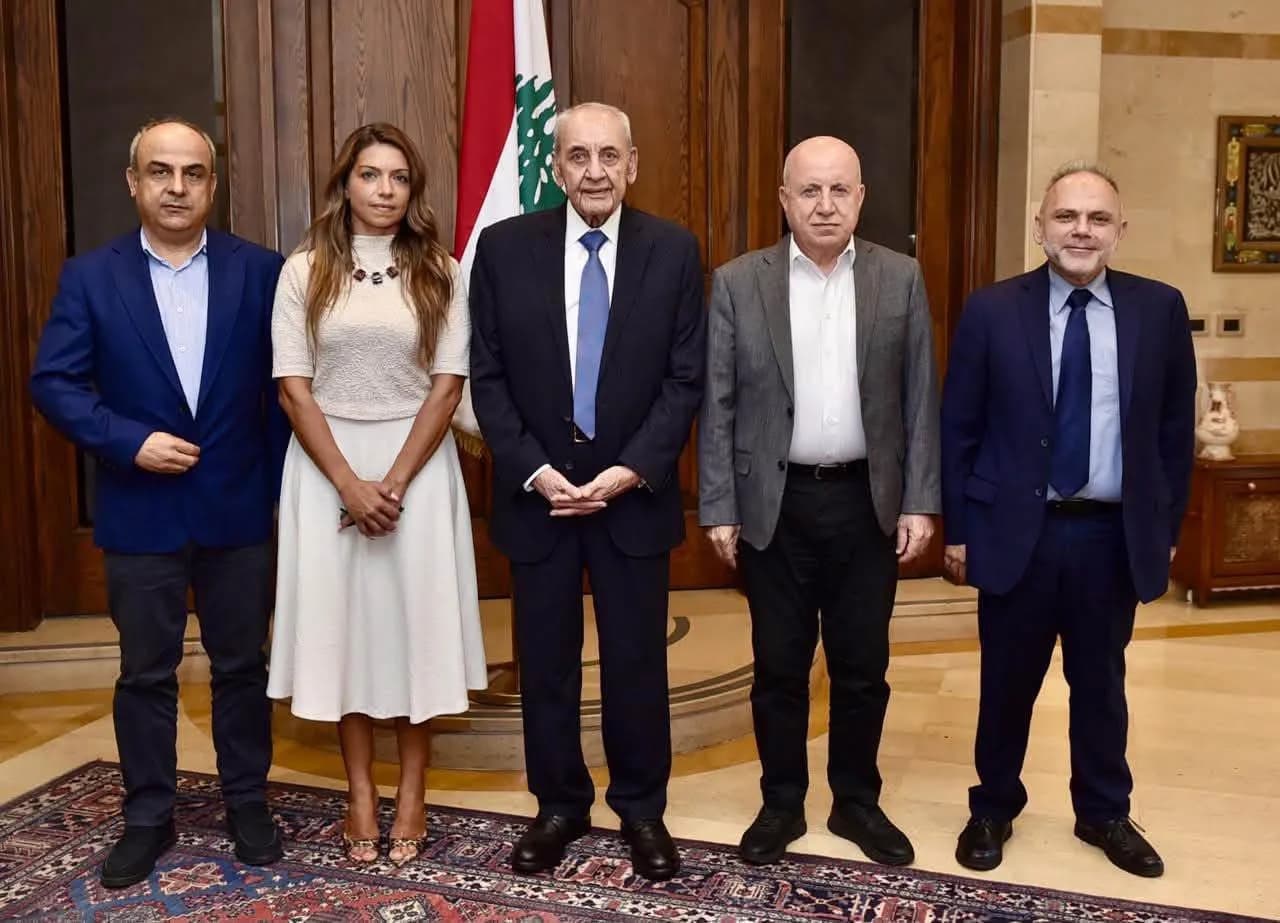
President of the Council of Ministers Nabih Berri received the President of the Council of the South, Engineer Hashem Haidar, accompanied by a delegation comprising Vice President Rasha Abu Ghazaleh, Board Member Dr. Youssef Doghan, and the General Financial Controller at the Council of the South, Yasser Dhibian.
During the meeting, the delegation presented President Berri with the fifth edition of the “White Hands” book series, documenting the most prominent works and projects implemented by the Council of the South in the areas of the South, the Western Bekaa and Rachaya, during the period extending from 2019 to 2025, particularly in the fields of infrastructure and development services.
The meeting also addressed the general situation in the country, in addition to the activities and programmes of the Council of the South at the present stage, and the efforts it is undertaking to address the repercussions resulting from the Israeli aggression and respond to citizens’ needs, alongside the issue of providing relief to displaced persons.
Following the meeting, the President of the Council of the South, Engineer Hashem Haidar, stated that the delegation had the honour of meeting with President Berri, during which it presented the fifth edition of the “White Hands” book, which highlights part of the Council of the South’s achievements, particularly in the implementation of infrastructure projects, noting that the Council continues to publish this series periodically with the aim of documenting its most prominent works and achievements.
Mr. Haidar pointed out that the work of the Council of the South is not limited to infrastructure projects, but also encompasses a wide range of initiatives and services, including contributing to reconstruction efforts, assisting patients and the wounded, and providing relief to displaced persons. These aspects are not fully covered in the book.
He also noted that President Berri was briefed on the work being carried out by the Council at the present stage, amid the difficult circumstances Lebanon has experienced, particularly the repercussions resulting from the two wars, with a focus on the efforts being made in the field of assisting displaced persons and securing basic services for citizens.
Mr. Haidar explained that, following the ceasefire, the Council of the South placed particular emphasis on rehabilitating schools, with the aim of enabling students in the South to return to their classrooms and continue their academic year normally.
He affirmed that the Council continues to implement a range of services and projects aimed at strengthening the resilience of the people of the South, supporting their continued presence on their land and encouraging their return, by working to provide the daily and essential services needed by local communities.
Mr. Haidar stressed that the Council of the South works across all villages of the South without discrimination or distinction, and within the framework of the applicable laws and regulations, noting that the delegation received from President Berri directives concerning the next phase of the Council’s work.
Regarding the role of the Council of the South at the current stage, particularly with regard to securing accommodation allowances, Haidar explained that the Council had, from the very outset, initiated a comprehensive assessment of damages, whether resulting from the previous phase or from the recent developments. He noted that the Council has completed damage assessments in a large number of villages and is currently working to complete and prepare the necessary files, in preparation for moving to the reconstruction phase as soon as the required funding is secured.
Mr. Haidar affirmed that the resources currently available to the state do not allow for reconstruction to be carried out on the scale required, stressing the importance of securing international support, particularly Arab and Gulf support, to help complete the reconstruction process.
He explained that reconstruction requires more time and is also linked to a number of political measures and solutions. However, there are steps and measures that can be implemented more quickly, including certain measures related to reconstruction and the provision of prefabricated housing for people in need of it.
The President of the Council of the South concluded by affirming that the Council will not wait for the reconstruction process to be completed before standing by the citizens, but will continue to work to provide whatever needs and services it can during this stage, in a manner that strengthens their resilience and supports their return to their villages and areas.